
Jersey Opiate Wars
- Nov 12, 2014
- 4 min read
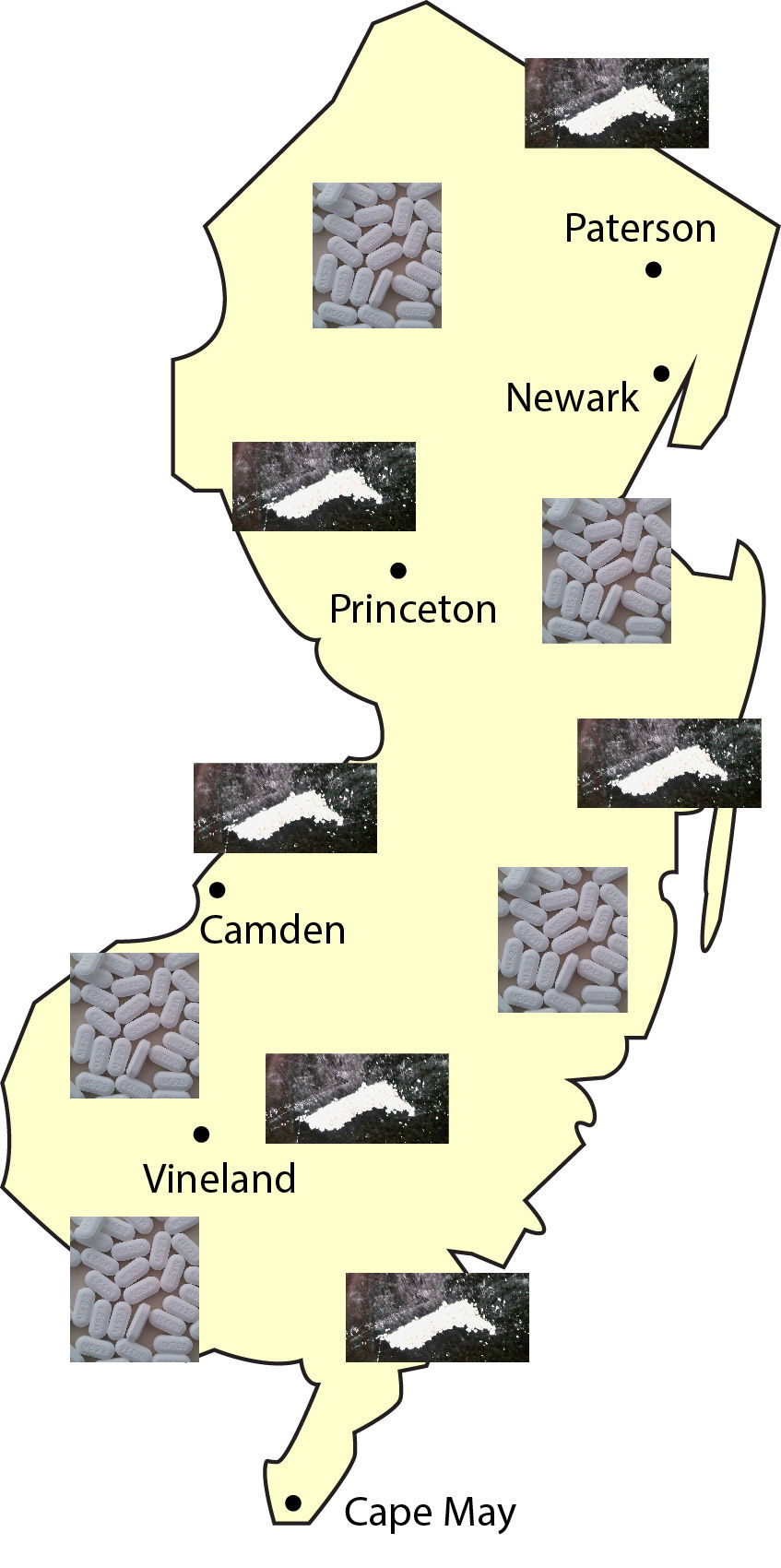
The Opium Wars gripped China into opium addiction during the 19th century, creating the so-called “Century of Humiliation.” Opium plagued history’s strongest empire for almost a century. Now, history repeats itself.
The prescription market boom fuels a pill and heroin epidemic in New Jersey and Philadelphia. The spike in insatiable painkiller appitites often leads to heroin addiction because both prescription painkillers and heroin belong to the opiate drug category.
“Prescription narcotics are a pathway to hell,” Philadelphia-Camden High Intensity Drug Trafficking Area Executive Director Jeremiah Daley said. “Hardcore opiate or heroin users have pretty heavy dependencies.”
Prescription opiates’ street value runs at $1 per milligram. For example, a person dependent on eight 10mg oxycodones per day pays $80 daily to ward off withdrawal. The person can find relief with a single bag of heroin valued at $10 per bag, Daley said.
“If the prescription runs out, or the doctor won’t write prescriptions anymore, a person will go to the streets for heroin,” he said.
If both demand and supply increase, the value decreases. The legal and illegal opiate markets mirror growth. The several painkiller addicts transitioning to heroin has created a demand high enough to drop the heroin wholesale price.
Pfizer Inc. manufactures fentanyl, oxycodone, morphine and other medications.
PFE’s net revenues increased 43.3 percent from 2010 to 2012, according to PFE’s annual reports.
Actavis (formerly Watson Pharmaceutical) - manufacturer of codeine, morphine and hydrocodone - grew 42.1 percent in net revenues between 2010 and 2012, according to Watson Pharmaceuticals’ annual reports.

“I definitely see an increase in prescription pill abuse,” Camden County Sgt. Jeff Moore said. “[For example] Somebody gets Percocet from the dentist for a procedure, and they place the unused pills in the medicine cabinet and forget they are there. And then, their kids or nephew will go through the cabinet and snatch it.”
Doctors loosely writing prescriptions and stolen prescription pads create two of the biggest causes for pill abuse, Moore said. “There are good doctors, just like how there are bad doctors."
“The pill problem began with a philosophical shift in pain management in the mid ’90s,” Daley said. “They began to worry less about fixing it and more about treating it.”
The healthcare environment will shift to rely on managed care, said three physicians in a 1995 article of Healthcare Forum Journal. The article “Managed Care Comes of Age” describes the healthcare industry’s transition “to identify and manage disease risk before it flowers into illness.”
According to the article, the decentralization of the healthcare system focuses more on clinical care through primary care physicians treating more aliments traditionally treated by specialists.
“Managed care firms save money and avoid complications for patients and employers by standardizing prescribing practices across participating physicians and developing drug formularies,” the article states. “Actual clinical-care processes are horizontal across disciplines and sites — organized around the patient’s needs through an episode of care, rather than around professions and departments.”
“The ’90s increased the amount of nurses and nurse practitioners who could dispense pain medication for therapeutic reasons,” Daley said.
An expanding number of medical professionals treated pain like a symptom under the new managed care environment, increasing the distribution of painkillers. More people began to embrace the opioid pills’ euphoric effects.
“The repositioning of the various actors in American healthcare has blurred the traditional ‘bright line’ between medical practice, the hospital and health insurer, and created many new entities that integrate financing and delivery of care,” the 1995 article “Managed Care Comes of Age" states.
The healthcare industry's new blurred lines placed prescription pads into a wider range of hands.
Daley said he first heard of Oxycontin around 1999.
“It came to our attention because of overdoses in the working and middle class neighborhoods,” he said.
The rise in prescription pill abuse is “an unfortunate byproduct of the evolution of our healthcare system, medical science and the growth of the pharmaceutical industry,” according to Indiana University-Purdue University Indianapolis researchers, in a November 2013 news release.
The Indiana University-Purdue University Indianapolis research showed areas with access to healthcare had higher rates of pill abuse.
“Overdoses are medical, so it wasn’t being reported before,” Camden County Prosecutor’s Office Spokesman Jason Laughlin said.
“For some time, I began to see more oxycodone overdoses than heroin,” Camden County Medical Examiner Dr. Gerald Feigin said. “Now, I see more from heroin again. They’re use it, they stop breathing and they’re dead.”
Heroin and pill abuse occurs across all races, ages, income brackets and neighborhoods, Moore said.
“Nothing shocks me anymore,” he said.
From Moore’s perspective, there is more awareness of the issue.
“I talked to two narcotics officers down in Runnemede when the two Triton students overdosed,” Laughlin said. “I asked if there was an increase in overdoses and they said, ‘No.’”
Last year, Acting Monmouth County Prosecutor Christopher Gramiccioni announced heroin abuse climbed to an epidemic level in his county.
“In areas like Monmouth County, overdosing might be rising,” Daley said. “But in the more urban areas, it’s just another day in the city.”
While the rate of heroin and pill overdoses varies across the region, the heroin content gains purity, Feigin said. “However, there is no such thing as a true overdose,” he said. “Anybody can overdose when exposed to any amount. Somebody could do it for 10 years and still overdose.”
The majority of the Philadelphia and South Jersey markets traffic South American White, the purest heroin in the Americas, Daley said.
The epidemic appears dismal. Unlike heroin dealers, pharmaceutical companies maintain political leverage.
In the 2008 presidential election, the healthcare industry donated more than $49 million to both Republican and Democrat federal candidates, according to opensecrets.org.
Pharmaceutical companies alone donated more than $13 million to both Republican and Democrat federal candidates in the 2008 presidential election, according to opensecrets.org.
Purdue Pharma has not replied to interview requests.
If the Indiana University-Purdue University Indianapolis research proves correct, then the Affordable Care Act could potentially produce more addicts across the nation.


Comments