
What "Alice in Wonderland" can teach us about falling in love with addicts
- Jan 8, 2015
- 3 min read

Addicts possess a charm. The addiction mindset, a behavioral symphony of captivatingly irrational thoughts and actions, often allures non-addicts into an expansive world of surrealist perspective. We've all heard the song lyrics: ...crazy, but you like it.
“People with addiction are exciting, engaging and free from a lot of inhibition most people harbor,” Clinical Care Assistant Supervisor Neil Hinshillwood said. “It’s essentially a vacation from the norm.”
Consider Lewis Carroll’s “Alice’s Adventures in Wonderland.” Boredom drives a young girl to naïvely chase random excitement down a rabbit hole into an enclave immune to the laws of time and space. Her behavior offends everyone living in this world, which seems to thrive off chaos. Eventually, she feels lost in the mayhem.
A compulsive and impulsive personality can overwhelm a person without an understanding of addiction. The constant chase for a dopamine fix requires complex behavioral patterns. A non-addict attempting an addict lifestyle equals giving a hearing aid to a person with great hearing. The volume is too high.
“In my experience, most non-addicts tend to be terrified of addicts,” Licensed Professional Counselor Leah Hatzenbuhler said. “Some insecure people are attracted to addicts. It fills an ego need to have somebody dependent on them. Also, if their partner is more mental than they are, then they not only have the upper hand, but they can feel ‘better’ than them.”
People with closet insecurities form codependent bonds with addicts. Often times, the non-addict’s frustration grows into a paradoxical emotional storm stirring with love from feeling needed and resentment for the addict’s behavior. Control trumps acceptance.

Misunderstanding the disease of addiction creates a blueprint for frustration. Step back to the “Alice in Wonderland” comparison. Alice continuously attempts to apply her own reasoning to Wonderland. The attempts continuously fail. People ignorant to addiction misinterpret behavioral nuances representative of an addict’s construct of reality. The engagement results in a cycle of miscommunication.
Compulsive talking or texting appears as smothering.
Alone time to compulsively work on a project or hobby appears like distance.
Impulsive decision making appears irresponsible or immature.
Dull emotions during arguments appear as not caring.
Vulgar comments or answers appear rude.
Many people mistakenly assume the addict brain empathizes like the average person.
The neurological epicenter features malfunctioning memory, motivational and reward processes within the prefrontal cortex – the home of empathy. The addict brain demonstrates a natural resistance to chaos.

According to a 2011 University of Tehran study, substance abuse populations display significantly higher rates of alexithymia, the inability to express or identify one’s emotions.
Alexithymia - and other empathy hindrances - stem from a dopamine misfire. People with addictions experience varying ranges of emotion but prefrontal cortex mutations hinder emotional regulation, expression and recognition. The resulting narcissism exudes a hologram of confidence.
A friend of mine, to whom I ascribe the nickname “J,” comments on the subject through an email. He speaks from personal knowledge.
“Most drug-addicts are bold and very outgoing, while in their search for money or drugs,” he said. “This, I believe, also attracts women to men, as self-confidence is something most women look for in a partner. There are many other things I can think of, but most of all, I believe it is the feeling of being needed, relied on. I think some of these women become addicted to the insanity that comes with being in a relationship with a drug-addict.”
Six years ago, a widow wrote the blog, I married a drug addict, describing her marriage with her former husband.
“He made me feel free,” she writes. “I did not have to commit to boredom. He at least could think freely and without prejudice. His mind was fluid. Or, was it that I could not commit to something stable....and boring?”
Courtesy of PhotoBucket

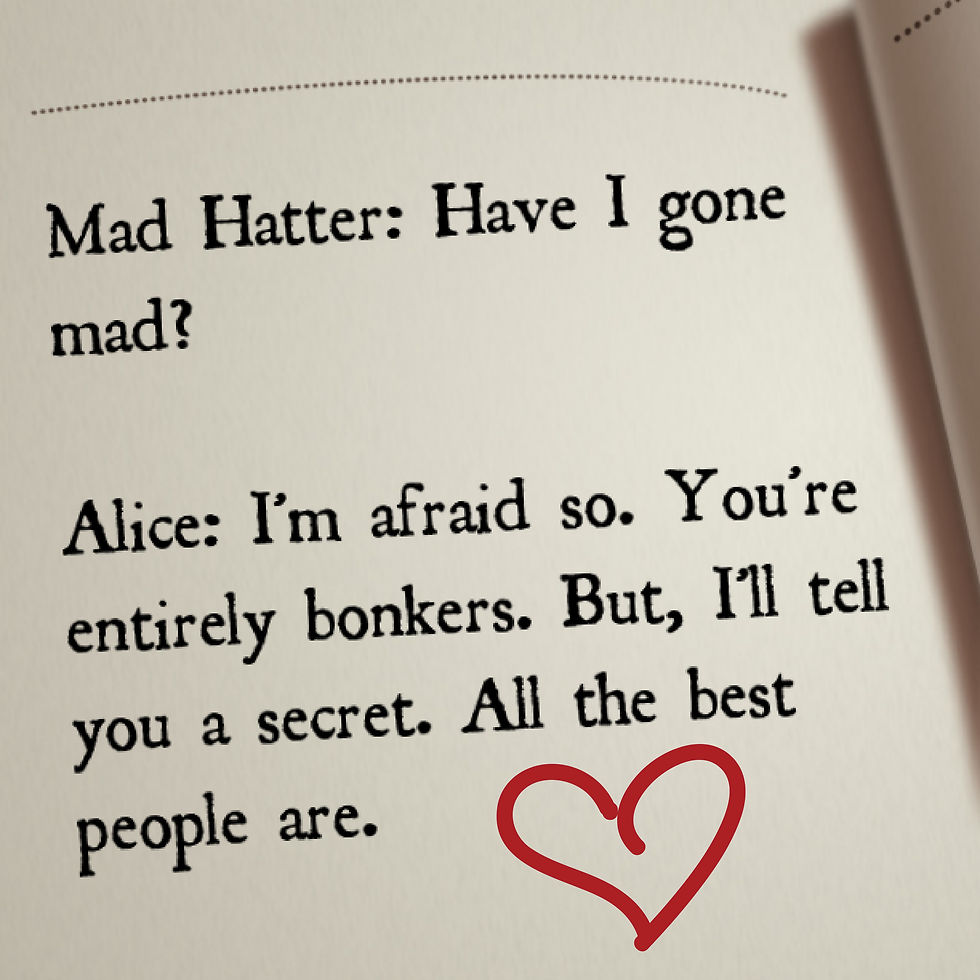
Recall the “Alice’s Adventures in Wonderland” tale, one more time. Perhaps, the Cheshire Cat can offer some solace.
“How do you know I’m mad?” said Alice.
“You must be,” said the Cat, “Or you wouldn’t have come here.”
Relationships with recovering addicts can be fulfilling, lifelong and healthy. If you start a relationship with an individual successfully in recovery, educate yourself about the disease of addiction before you engage in intimacy. Remember, a cure for a addiction is a fairy tale, people with addiction learn to live with the condition. Accept that person's flaws and quirks. You'll find all the excitement without the mess.
#addiction #aliceinwonderland #drugs #love #relationships #disease #biochemistry #neurology #science #rewardcenter #substanceabuse #substancedependent #ventraltegmental #sobriety #southjersey #brain #heroin #valium #benzodiazepine #painkillers #drinking #treatment #lewiscarroll #psychology #opiates #pharmaceuticals #pills #recovery #xanax #klonopin


Comments